Michael Huber on Tradition and Change

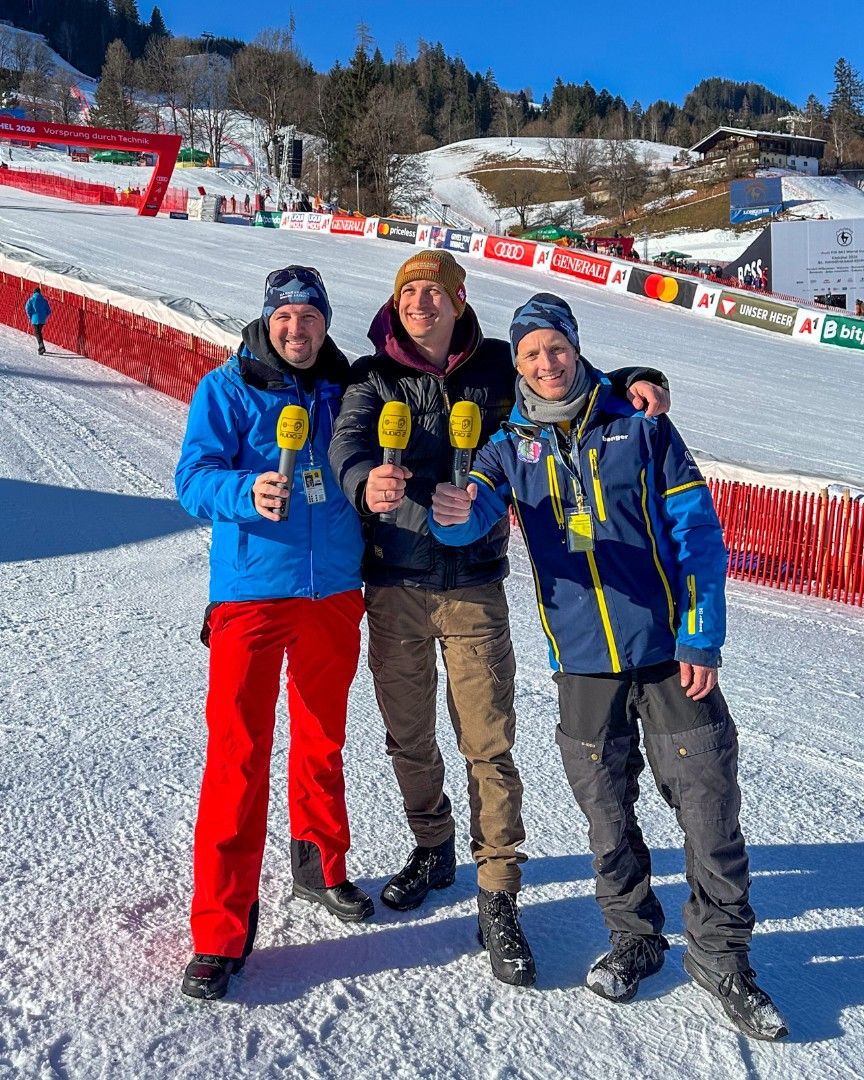
British radio journalist Chris Cummins is in Kitzbühel for the eleventh successive year to ensure that the blind and visually impaired ski fans can follow all the excitement of the Hahnenkamm Races in English as well as German. He provides the English commentary, while his colleagues from Audio 2 commentate in German. On Friday afternoon, he invited OC chief Michael Huber for a chat and wrote the following story about the Hahnenkamm Races.
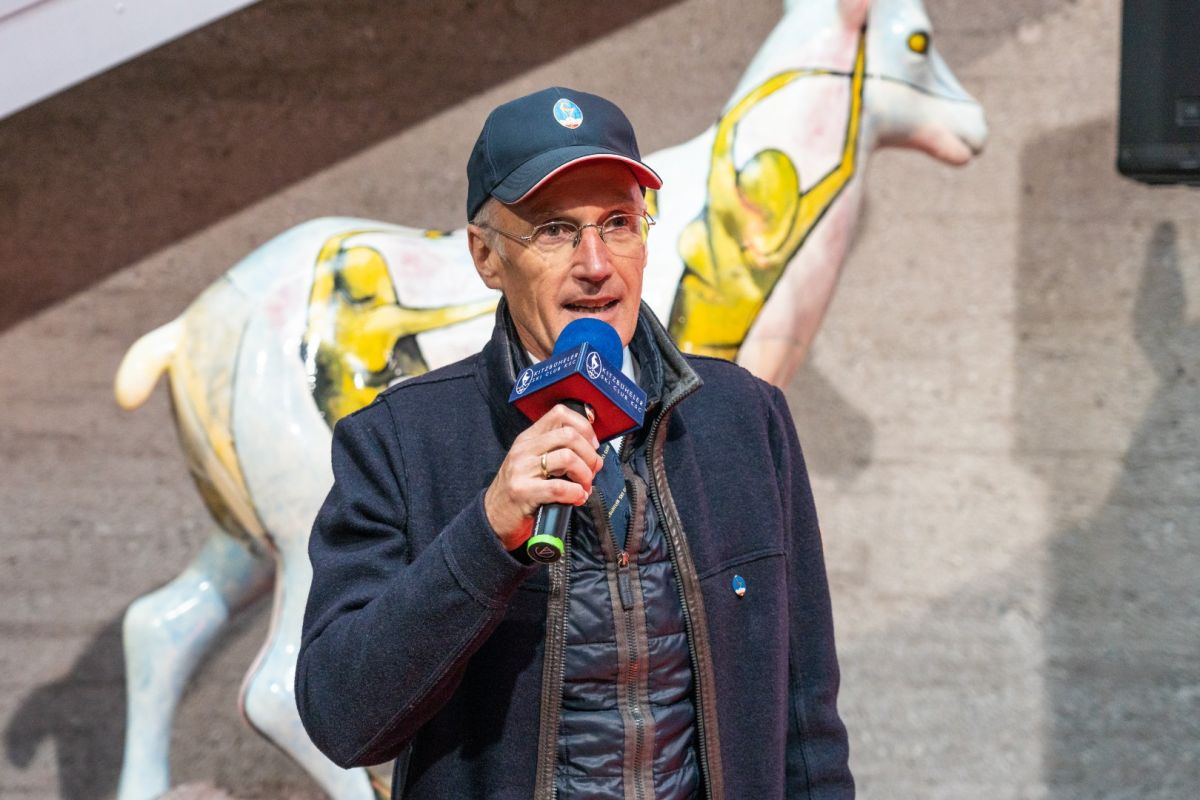
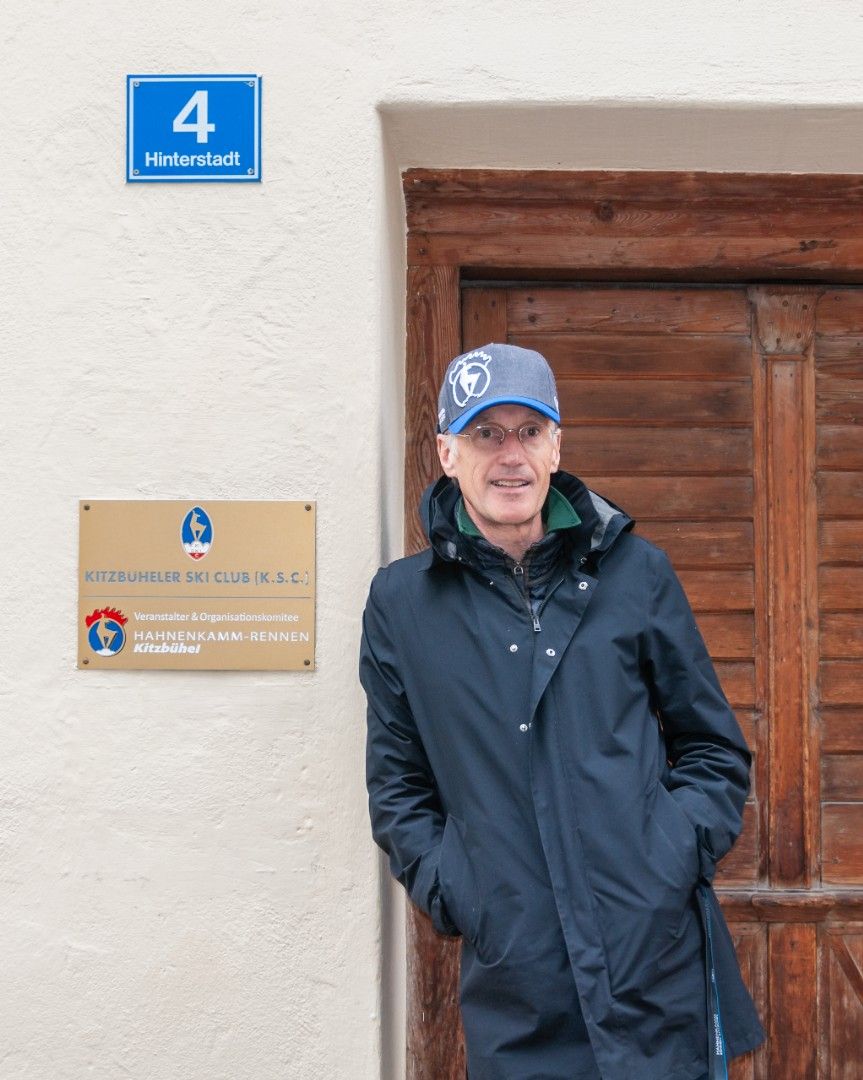
After the Super-G press conference wrapped up, I caught up with the man who makes it all happen here in Kitzbühel. Michael Huber, president of the Kitzbühel Ski Club, was buzzing with his usual infectious enthusiasm—and he had quite the story to share. You can hear it all on the Audio2 livestream on this website right here.
“I just got an email from a friend in Hanoi,” Huber told me, still clearly delighted by the news. “For the first time, someone was watching the Hahnenkamm race in Vietnam, and they could hear your commentary!” It’s a small detail, but it speaks volumes about how far this legendary race has come. From a local Alpine tradition to a globally-streamed spectacle, the Hahnenkamm is reaching corners of the world that early organizers could never have imagined.
120 Years of Racing Down the Same Mountain
But if you think streaming to Southeast Asia is impressive, Huber had an even more remarkable historical nugget for me. “Today I was feeling very emotional,” he explained. “Because it’s not just 60 years since the World Cup was conceived in 1966—it’s actually 120 years since the very first race on this mountain.” On April 8th, 1906, skiers competed on essentially the same course we’re using today. Same vertical drop. Same finish area. Even the start was only slightly higher. “I felt the atmosphere today,” Huber said, “knowing that ski races have been happening at exactly this point for 120 years. It made it even more spectacular.” I had to laugh—and shudder—imagining those early racers tackling the notorious Steilhang on wooden skis with leather bindings. Apparently, only nine of the fourteen registered participants showed up that day because rain had frozen overnight on the course. No grooming machines back then!
The Mystery of “Michi 60”
Speaking of numbers, I had to ask about last year’s curious “Michi 60” painted on the Streif course. Turns out it was a surprise 60th birthday tribute to Huber himself. “They knew if they asked me, I’d say no,” he laughed. “So they just did it.” The unintended consequence? People around the world started calling every “Michi” in the Kitzbühel area to offer birthday congratulations. Wrong Michi!
The Delicate Balance
My final question was perhaps the most important: How do you honor 120 years of tradition while still moving forward? “This is really a kind of secret,” Huber admitted. “You cannot learn this at university. At the end, it’s a kind of feeling.” He described how every few years, he and his team propose changes—sometimes successfully, sometimes not. “I get mad and bored if we always do the same thing,” he said. But there are sacred lines you don’t cross. He once tried moving the Ganslern slalom to the downhill course. “I got shouted at so much, I knew—don’t touch that one!” This year’s improvements focused on the finish stadium—new video screens, a flattened finish area, grandstands raised just two meters. “It’s a completely new feeling,” Huber said, “without damaging the history and culture.” It’s that intuitive balance—respecting what makes Kitzbühel special while subtly enhancing the experience—that keeps the Hahnenkamm the most prestigious race weekend in skiing. With two more race days ahead, Huber wished us well and headed back into the fray. One thing’s certain: whether you’re watching from the packed grandstands or from a living room in Hanoi, you’re witnessing something truly special.